
-
Products
- Applications
- Support
- Business
- About Us
Global - English

Brazil's agricultural drone fleet has grown fast in recent years, expanding from around 3,000 units in 2021 to more than 25,000 by 2025, according to research from Embrapa, Brazil's federal agricultural research agency. Much of that growth traces back to a problem ground equipment has always carried: machinery that touches the soil during spraying can compact it, crushing crops and cutting yields in the process. Embrapa's own field testing found this kind of compaction can reduce soybean yields by as much as 7% and rice yields by around 4%.
Rodrigo Oliveira Camilo, a farmer at São Lázaro Farm, saw a similar pattern on his own land. In 2024, he replaced his boom sprayer with an XAG P100 Pro agricultural drone, a shift that changed how he manages crop protection across the farm, from open soybean fields to a tightly spaced coffee plantation.
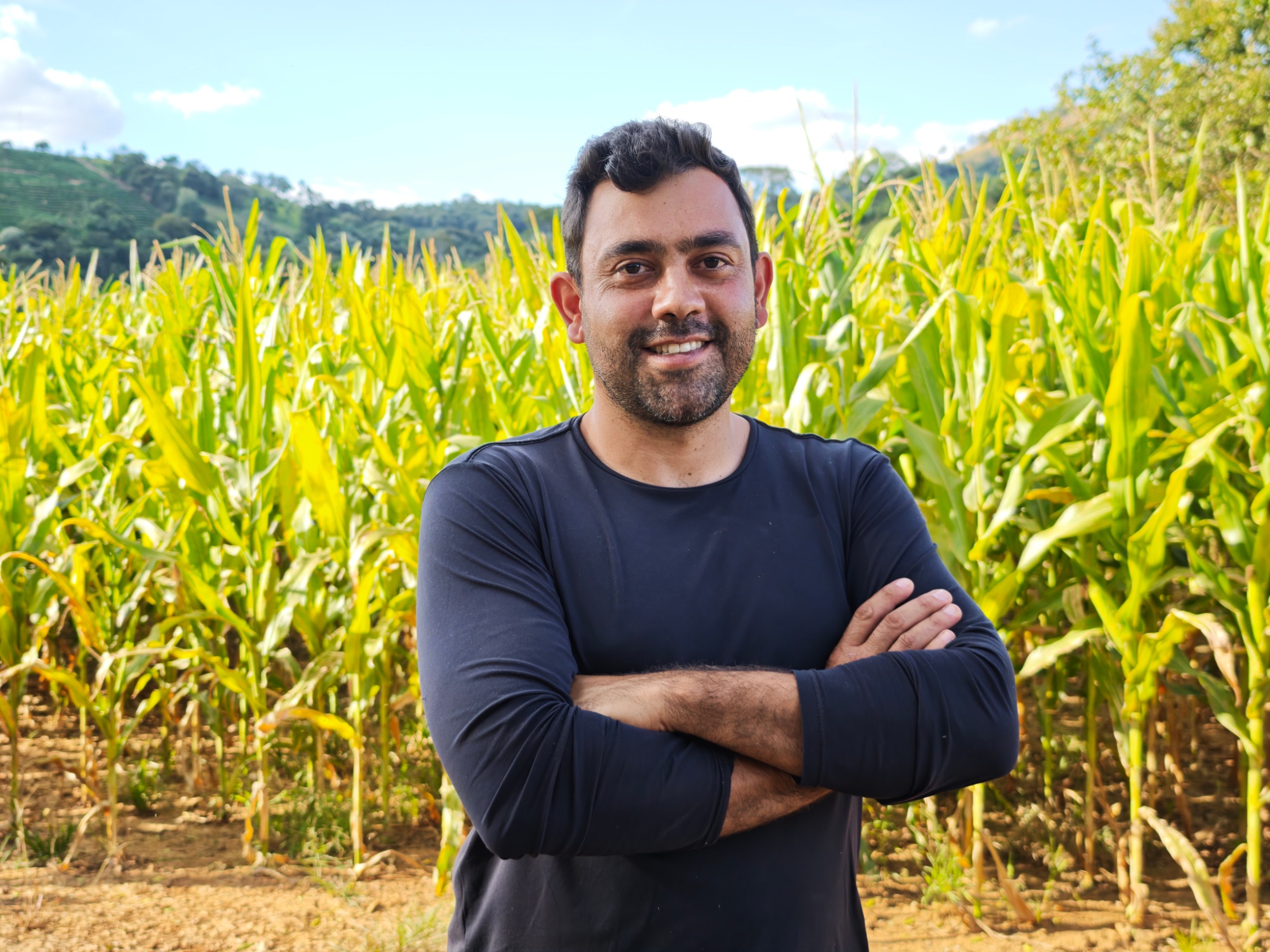
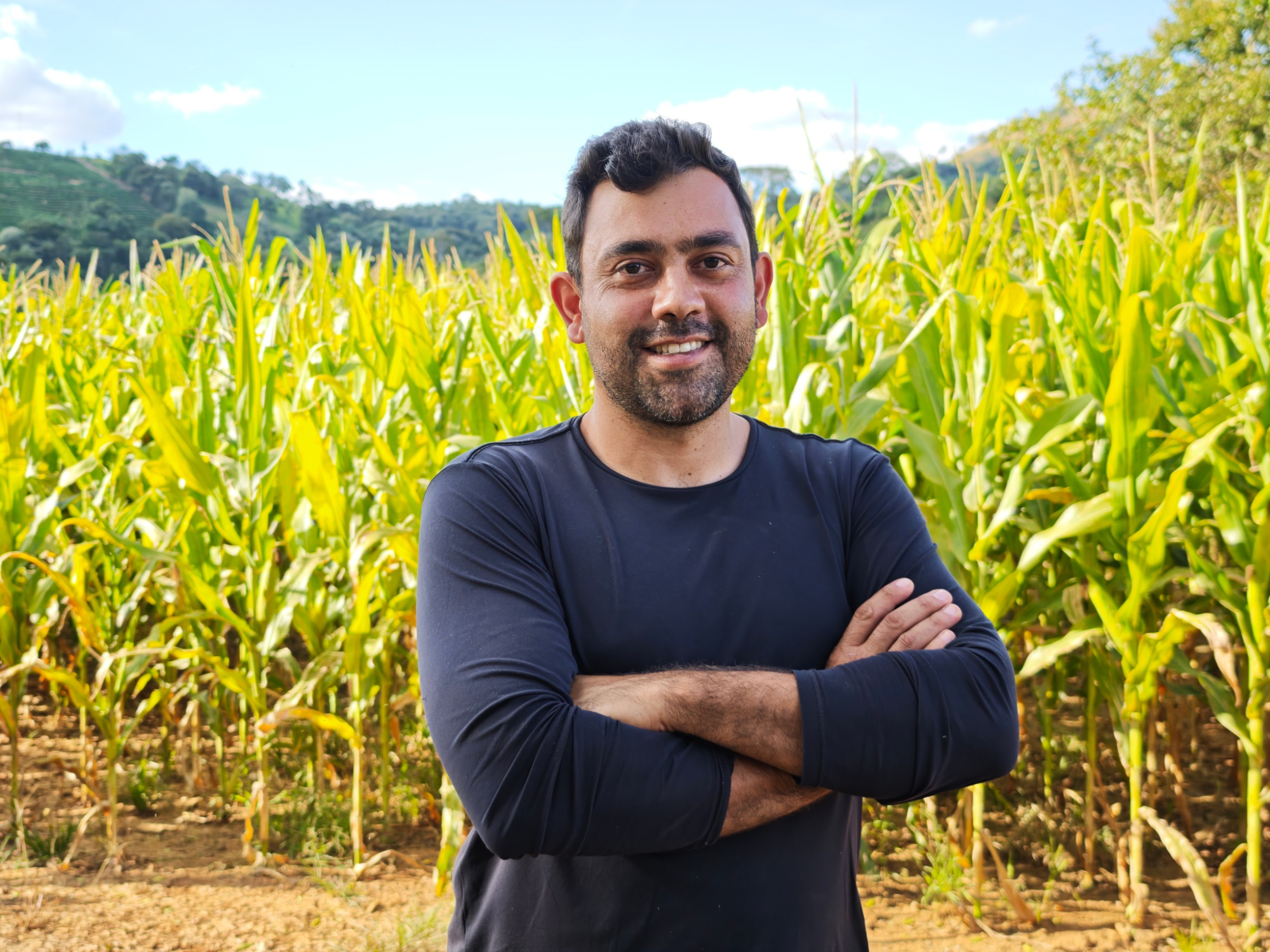
Rodrigo Oliveira Camilo standing in his cornfield at São Lázaro Farm
Upgraded Crop Protection
Spanning about 500 hectares, Rodrigo's farm produces soybeans, corn, sorghum, and coffee. With 10 hectares used for growing coffee, and the remaining 490 hectares are planted with soybeans in the first season of summer, and corn and sorghum in the second season.
Rodrigo originally used a 20-meter boom sprayer for crop protection. This type of equipment is widely used across Brazil for its broad coverage and speed, but its tracks compact the soil with every pass, damaging crops and reducing yields over time. Transporting the equipment between fields also demanded significant time and labor, and tight spraying windows were sometimes missed due to scheduling delays.
Rodrigo recognized these challenges and decided to embrace a new approach. "The main factor that led us to make the purchase was the drones don't damage the crops during spraying operations." he said. In 2024, he bought an XAG P100 Pro Agricultural Drone for his farm, primarily using it to apply herbicides, insecticides, fungicides, and foliar fertilizers.
The P100 Pro's lightweight design, expanded payload capacity, and precision nozzle system have made a noticeable difference in Rodrigo's day-to-day operations. During peak growing season, when his team races against the clock to manage pests across the farm headquarters and outlying fields, the drone and its equipment now fit in a small truck, removing a logistics bottleneck that used to slow the whole operation down.
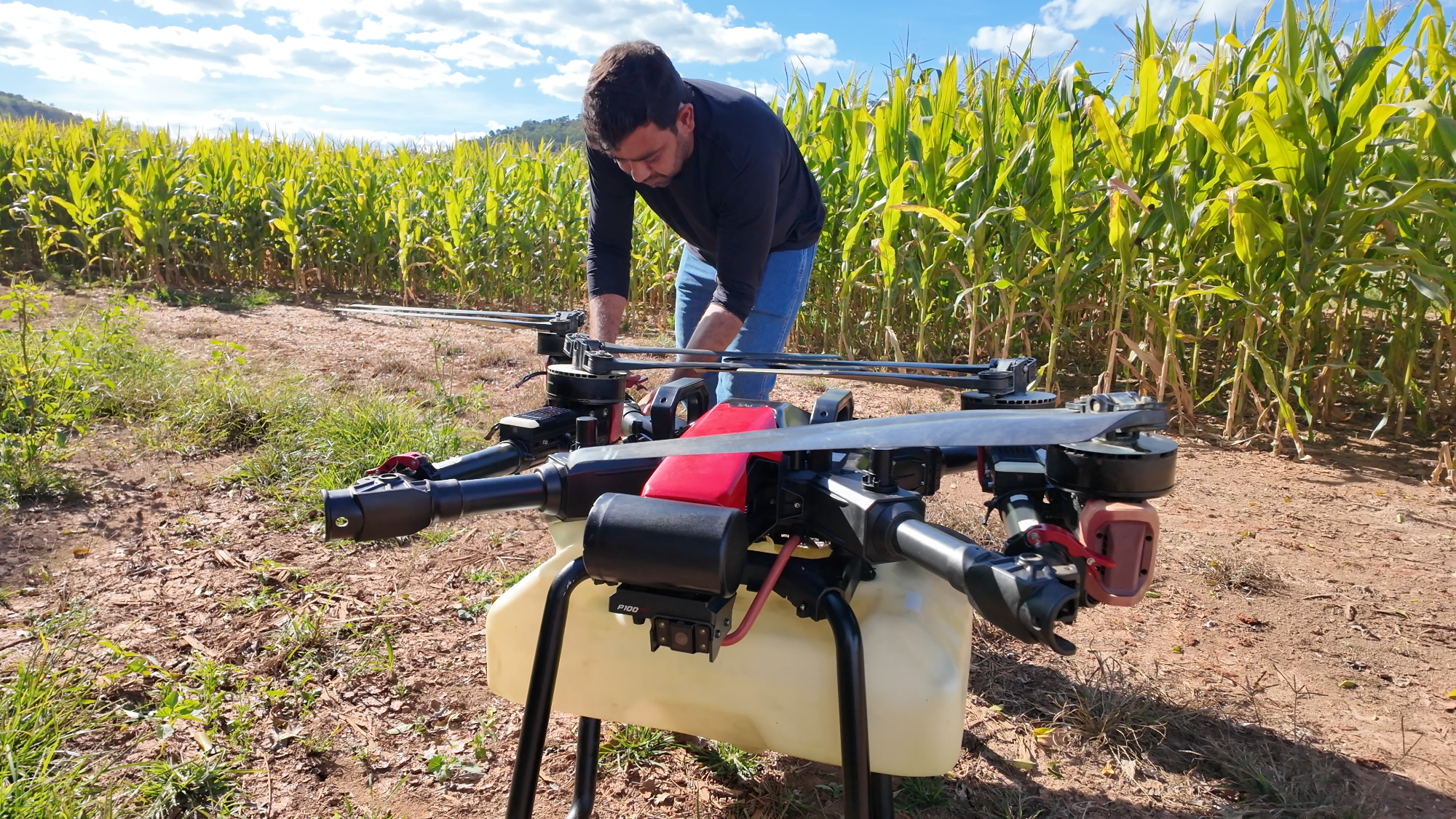
Rodrigo Oliveira Camilo gets his P100 Pro ready for the field
Visible Improvement in Efficiency
Beyond solving the logistics problem, drones have upgraded operational efficiency by changing the nature of the work itself. By Rodrigo's estimate, boom spraying costs him about 8% of his yield due to machine turns, soil compaction, and the uneven shapes of his planting areas. That problem is worse on the coffee plantation, where the sprayer's size makes precise application nearly impossible and significantly limits productivity.
Drones resolve these issues by operating entirely above the ground, without contact with the soil, which eliminates compaction while maintaining consistent spray coverage. Moreover, the XAG P100 Pro features a 50-liter smart liquid tank and RevoSpray system for precision atomization, while the quad-rotor design generates strong downdraft to ensure uniform coverage for both sides of leaves. With the built-in RTK positioning system, the drone delivers centimeter-level accuracy and consistent field mapping across diverse scenarios.
Rodrigo's data confirms the impact. In field crops, the P100 Pro achieves efficiency comparable to boom sprayers, at roughly 10 hectares per hour. On the coffee plantation, though, the difference is much larger: the drone covers 40 to 50 hectares a day, compared to about 10 hectares a day with the traditional spraying method, a 4 to 5 times increase in efficiency. Unlike ground equipment, the drone doesn't need to navigate rows or turn around between passes, which makes it far better suited to the plantation's tighter, more irregular layout.
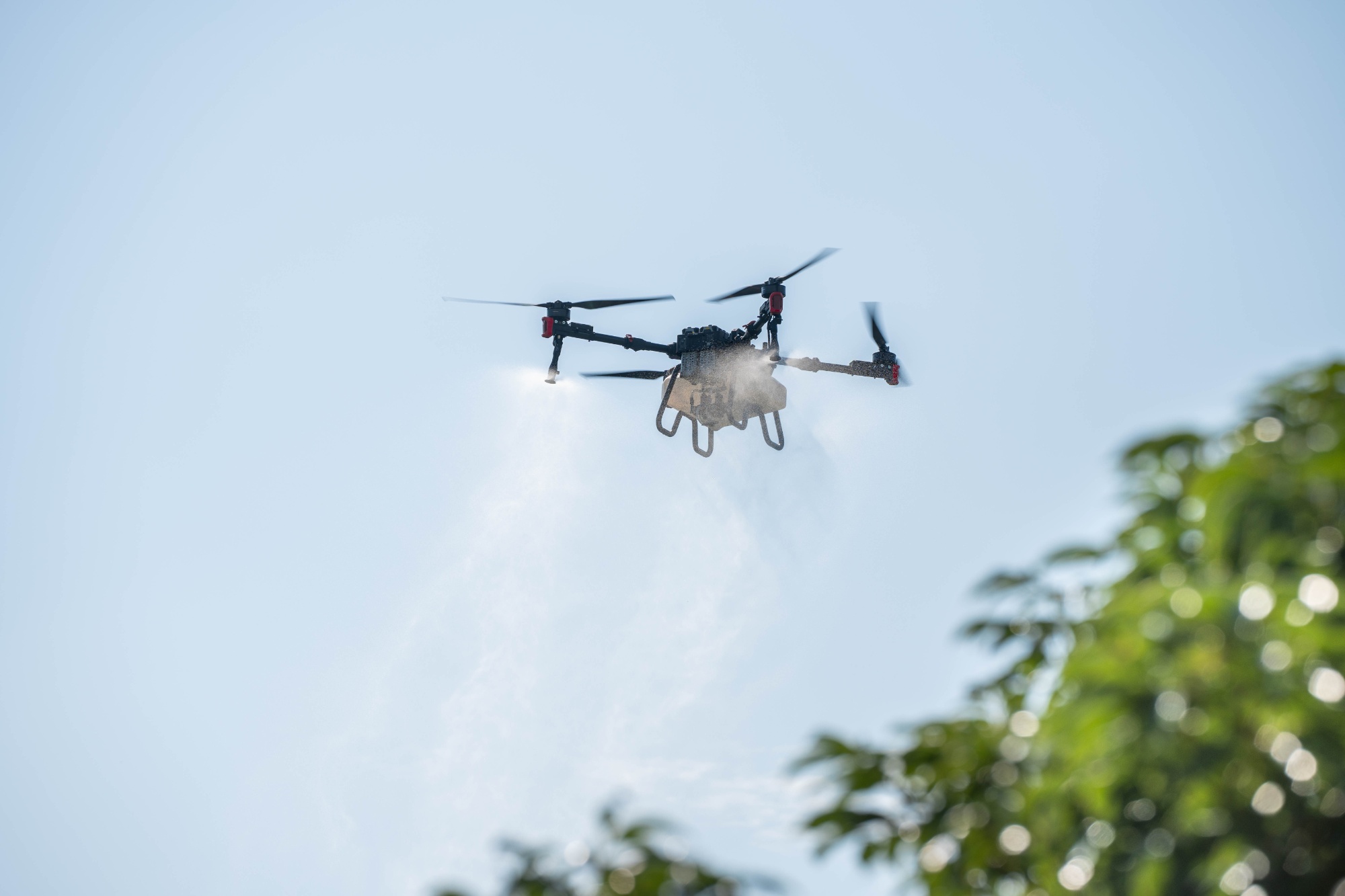
P100 Pro delivering precise spraying for crop protection
Quantifiable Economic Savings
The numbers tell the story. Applied across Rodrigo's farm, that 8% loss works out to about 39.2 hectares of crop loss per quarter, lost not to weather or pests, but to the weight of the machines themselves. That loss translates into an estimated 3,136 bags of soybeans and 4,900 bags of corn annually, and at current market prices, those losses exceeded 650,000 reais (approximately $128,631 USD) last year alone, enough to purchase multiple XAG drones.
These numbers only capture the losses avoided. When factoring in the 4-to-5 times increase in spraying efficiency on coffee plantations, along with reduced labor hours, lower operational costs, and the simplicity of drone operation that frees Rodrigo's team from time-consuming manual work, the cumulative economic gain becomes even more significant. In Rodrigo's hands, XAG drones don't just save crops, they turn cost centers into productivity gains.
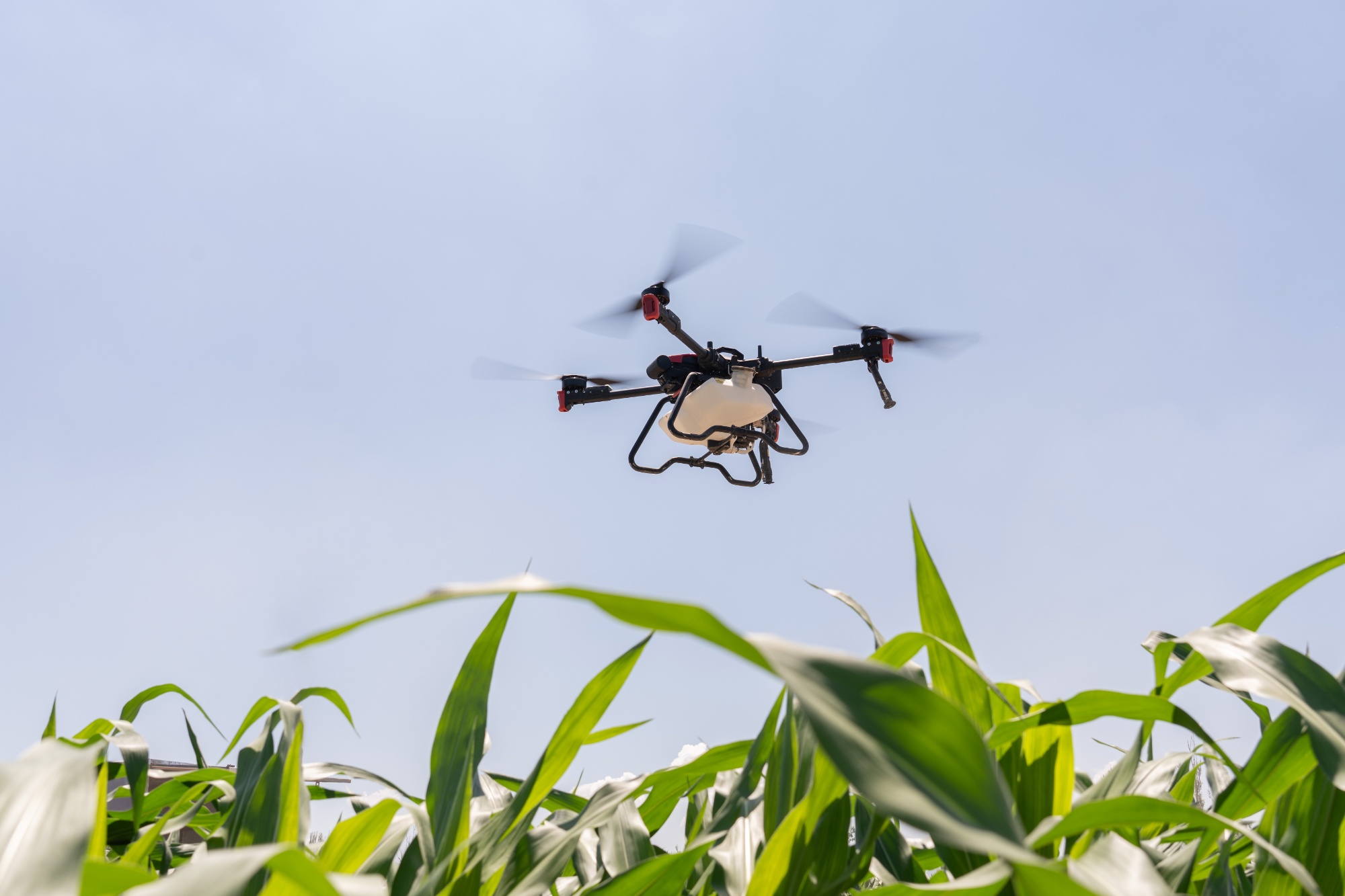
P100 Pro flying over the cornfield
Rodrigo summed it up simply: in every drone-assisted task, they achieved their objectives with outstanding efficiency.
"XAG's drone technology is practical, easy to use, and reliable," Rodrigo said, reflecting on a year of drone-assisted operations across his farm. His experience mirrors a broader shift already underway across Brazil, where more farms are moving from ground equipment to drone-based spraying each season.
